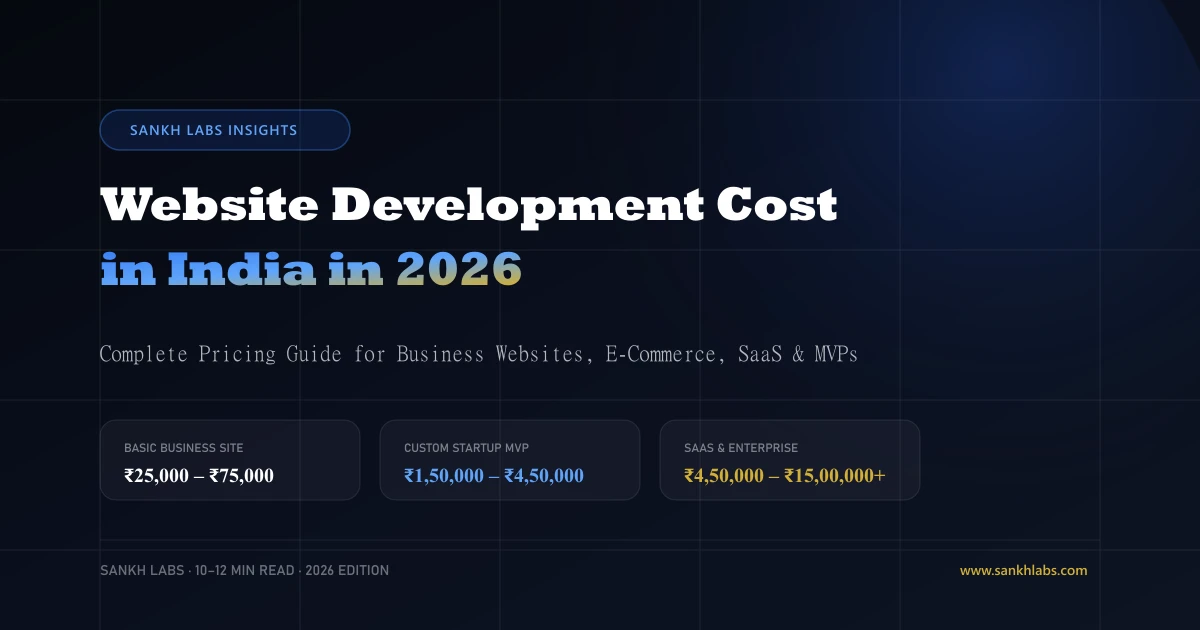
If you are planning to build a digital presence, launch an e-commerce brand, or engineer a scalable web product in 2026, one foundational question inevitably arises: How much does website development actually cost in India?
The answer is rarely a single fixed number. In India’s mature technology ecosystem, you can find freelancers quoting ₹15,000 ($180) for a basic WordPress template, while specialized engineering agencies charge ₹15,00,000 ($18,000) or more for a modern, high-performance web application. This massive variance frequently leaves founders, small business owners, and enterprise decision-makers confused about what a realistic budget should look like.
In 2026, web development is no longer just about putting text and images on a browser screen. Modern websites function as high-converting sales funnels, secure transactional engines, and sophisticated software products built with responsive frontend frameworks, headless CMS backends, real-time analytics, and cloud infrastructure.
In this comprehensive guide, we provide a transparent, practical breakdown of website development costs in India in 2026 across different website types, technology stacks, pricing models, and hidden maintenance expenses—helping you make an informed, ROI-driven investment.
Website Development Cost in India (2026 Summary Table)
The following table outlines the realistic cost ranges and development timelines for various categories of websites built by professional developers and agencies in India in 2026:
| Website Type | Scope & Key Features | Cost Range (INR) | Cost Range (USD) | Typical Timeline |
|---|---|---|---|---|
| Basic Corporate Website | 5–10 pages, responsive UI, contact forms, basic SEO setup | ₹25,000 – ₹75,000 | $350 – $1,000 | 1–3 Weeks |
| E-Commerce Store | Shopify/WooCommerce, payment gateway, inventory, product catalogs | ₹75,000 – ₹3,00,000 | $1,000 – $3,800 | 3–6 Weeks |
| Custom Startup MVP | Next.js/React frontend, custom APIs, user auth, onboarding flow | ₹1,50,000 – ₹4,50,000 | $2,000 – $5,500 | 2–6 Weeks |
| SaaS Product / Web App | Multi-tenancy, subscription billing, custom dashboards, role access | ₹4,50,000 – ₹15,00,000+ | $5,500 – $18,000+ | 8–16 Weeks |
| Enterprise Custom Portal | Bespoke ERP/CRM, complex data pipelines, high-security architecture | ₹10,00,000 – ₹35,00,000+ | $12,000 – $42,000+ | 12–24 Weeks |
Detailed Breakdown: Website Development Costs by Category
1. Basic Business & Informational Websites (₹25,000 – ₹75,000)
A basic business website serves as a digital brochure for local businesses, consulting firms, service agencies, or small clinics. Its primary objective is to establish credibility, present services clearly, and capture inbound inquiries through contact forms or WhatsApp integrations.
Typical features include a home page, about us, service catalog, client testimonials, contact page with interactive Google Maps, and mobile-friendly responsive layouts. In 2026, most quality developers build these using modern static site generators or headless CMS platforms (such as Astro or Next.js) rather than clunky WordPress themes to ensure sub-second loading speeds.
2. E-Commerce Websites & Online Stores (₹75,000 – ₹3,00,000)
E-commerce platforms require dynamic database architectures, secure transaction processing, and user account management. Pricing for online stores depends heavily on whether you choose a hosted platform like Shopify or opt for a custom headless e-commerce build:
- Shopify / WooCommerce Setup (₹50,000 – ₹1,50,000): Customizing pre-built themes, configuring payment gateways (Razorpay, Cashfree, Stripe), shipping integrations (Shiprocket, Delhivery), and catalog uploads.
- Custom Headless E-Commerce (₹2,00,000 – ₹5,00,000): Utilizing Next.js frontend with Medusa.js or Shopify Storefront API for blazing-fast page transitions, customized checkout logic, and superior search engine indexing.
3. Custom Startup MVPs & Prototypes (₹1,50,000 – ₹4,50,000)
For early-stage tech founders, building an MVP (Minimum Viable Product) is about validating product-market fit with real users as fast as possible without burning excessive capital. Rather than spending 6 months on feature-bloated codebases, our MVP development services focus on shipping core value propositions within 2 to 4 weeks.
A startup MVP typically encompasses secure OAuth/JWT authentication, database schema design (PostgreSQL/MongoDB), interactive user dashboards, and third-party API webhooks. You can explore how startups validate products rapidly in our dedicated startup software development guide.
4. SaaS Platforms & Multi-Tenant Web Applications (₹4,50,000 – ₹15,00,000+)
Software-as-a-Service (SaaS) products operate at a completely different technical tier than standard websites. A SaaS product requires multi-tenant data isolation, recurring subscription billing, role-based access control (RBAC), team workspaces, automated onboarding, usage telemetry, and customer administration dashboards.
Because of the deep architectural considerations involved in database partitioning, API rate limiting, and automated billing webhooks, partnering with an experienced SaaS development company is essential to avoid costly technical debt and architectural rewrites down the line.
5. Enterprise Web Portals & Internal Automation Systems (₹10,00,000 – ₹35,00,000+)
Enterprise platforms are engineered for high concurrency, strict data compliance, custom business logic, and integration with legacy ERPs or CRMs. These systems automate operational workflows, track supply chains, manage vendor networks, or power internal corporate operations. Learn more about our end-to-end capabilities across custom software in our software development services overview.
What Drives Website Development Costs in India in 2026?
When analyzing proposals from various agencies, understand the key technical factors that directly influence the budget:
- UI/UX Design Fidelity: Off-the-shelf templates cost very little but result in cookie-cutter websites that fail to differentiate your brand. Bespoke UI/UX design crafted in Figma with custom design systems, micro-interactions, and tailored user flows requires dedicated product design hours, increasing initial investment but generating significantly higher conversion rates.
- Technology Stack: Legacy CMS platforms like WordPress or Drupal carry lower upfront costs but often suffer from plugin bloat, sluggish performance, and vulnerability exploits. Modern stacks—such as Next.js 14/15, TypeScript, Tailwind CSS, Node.js, and Python/Django—command higher initial engineering investment but deliver sub-second performance, bulletproof security, and effortless scalability.
- Backend Architecture & Database Design: Static informational websites require no custom database. Conversely, web applications requiring real-time updates, concurrent user sessions, complex database indexing, and automated background jobs require seasoned backend engineers.
- Third-Party Integrations: Integrating payment gateways (Razorpay, Stripe, PayU), communication services (Twilio, WhatsApp Business API, SendGrid), and customer relationship platforms (HubSpot, Salesforce) adds testing and webhook synchronization complexity.
- Performance & Technical SEO Engineering: Ensuring 95+ Google PageSpeed scores, optimal Core Web Vitals (LCP < 2.5s, CLS < 0.1), structured JSON-LD schema markup, and dynamic XML sitemaps requires meticulous engineering discipline. Review real examples of performant systems in our engineering case studies.
Hiring Options: Freelancers vs. Agencies vs. In-House Teams
How you choose to execute your web project determines not only the total budget but also your execution risk, code quality, and delivery speed:
| Hiring Model | Hourly Rate (INR) | Hourly Rate (USD) | Delivery Risk | Code Quality & Scalability | Best Fit For |
|---|---|---|---|---|---|
| Freelance Developer | ₹800 – ₹2,500/hr | $10 – $30/hr | High (Availability & Attrition) | Variable (Limited QA/Testing) | Small bug fixes, basic landing pages, personal sites |
| Boutique Engineering Studio (e.g. Sankh Labs) | ₹2,000 – ₹4,500/hr | $25 – $55/hr | Low (Direct PM, Dedicated Team) | High (Production-grade, clean architecture) | Startups, MVPs, high-growth businesses, custom SaaS |
| Large IT Enterprise Agency | ₹4,500 – ₹10,000+/hr | $55 – $120+/hr | Very Low (Redundant Staffing) | High (Enterprise Processes) | Government tenders, legacy enterprise migrations |
| In-House Developer (Full-Time) | ₹60,000 – ₹2,50,000/mo | $800 – $3,000/mo | Moderate (Recruitment & Benefits overhead) | High (Long-term dedicated focus) | Funded tech startups with recurring product iterations |
Hidden & Recurring Maintenance Costs to Anticipate
A common mistake founders make is budgeting only for initial design and development while forgetting ongoing operational overhead. To keep your website secure, fast, and operational, plan for the following annual expenses:
- Domain Name Registration (₹800 – ₹2,500/year): Standard .com, .in, or .io domain renewals from registrars like Cloudflare or Namecheap.
- Cloud Infrastructure & Hosting (₹3,000 – ₹60,000+/year): Basic static websites can be hosted affordably on platforms like Vercel or Cloudflare Pages. Custom web apps and databases running on AWS, Supabase, or DigitalOcean range between ₹2,500 to ₹15,000+ per month depending on active users.
- Annual Maintenance Contracts & SLA (₹20,000 – ₹1,20,000/year): Routine dependency updates, security vulnerability patches, database backups, uptime monitoring, and minor feature additions.
- Third-Party SaaS Tools & APIs (₹5,000 – ₹30,000/year): Transactional email sending (Resend/SendGrid), SMS OTP verification, and error-monitoring tools (Sentry).
How Founders Can Reduce Web Development Costs by 30–50%
Saving money on software development should never mean cutting corners on code quality or security. Instead, smart founders achieve dramatic cost efficiencies through disciplined scoping:
- Write a Clear Specification Document: Ambiguity is the single largest driver of budget inflation. Document user personas, feature lists, wireframe flows, and exact business logic before approaching an agency.
- Build a Relentlessly Lean MVP: Strip away secondary features like complex multi-tiered affiliate systems, dark mode toggles, or AI chat widgets from Version 1. Build only the core loop that solves your customer's primary pain point.
- Leverage Battle-Tested Open Source Libraries: Don't pay developers to build authentication or UI component libraries from scratch. Modern frameworks like Next.js, Tailwind CSS, and shadcn/ui provide robust foundations that cut engineering hours in half.
- Choose Fixed-Scope Milestones: Milestone-based contracts tie payments directly to tangible deliverables, keeping both parties aligned on schedule and budget.
Frequently Asked Questions (FAQs)
What is the minimum cost to build a website in India in 2026?
A standard, professional 5-page business website in India built with responsive layouts, modern design, and clean code generally starts at ₹25,000 to ₹40,000 ($350 – $500). While cheaper options exist below ₹10,000, they often rely on pirated templates, lack mobile optimization, and carry high security risks.
Why do website development quotes vary so wildly in India?
Quotes differ because agencies sell fundamentally different deliverables. A low quote usually signifies an uncustomized pre-built template with zero testing, poor SEO hygiene, and no warranty. A higher quote reflects custom product design, bespoke engineering, automated testing, scalable database architecture, and dedicated project management.
How much does a custom SaaS MVP cost to build in India?
A production-ready SaaS MVP in India typically costs between ₹1,50,000 and ₹4,50,000 ($2,000 – $6,000) and takes 2 to 6 weeks to ship. Complex platforms requiring real-time collaboration, custom AI workflows, or complex data pipelines can range between ₹6,00,000 and ₹15,00,000+.
Can Indian agencies deliver high quality for global startups?
Yes. India produces world-class software engineers who build and maintain platforms for Silicon Valley, European scale-ups, and global enterprises. Boutique Indian engineering studios offer 60–75% cost savings compared to US or Western European rates while maintaining identical or superior engineering rigor.
How long does it take to develop a modern business website?
A basic corporate website takes 1 to 3 weeks. An e-commerce store takes 3 to 6 weeks. A custom startup MVP typically requires 2 to 6 weeks. Complex enterprise web portals or full-scale SaaS platforms take 8 to 16 weeks depending on architectural scope.
Conclusion: Strategic Investment Over Cheap Execution
In 2026, your website is your company’s highest-leverage digital asset. It is the first touchpoint prospective clients, investors, and partners evaluate when deciding whether to do business with you.
Choosing the cheapest possible developer almost always leads to technical debt, slow loading speeds, missed lead conversions, and an inevitable costly rebuild within 12 months. Conversely, investing in clean architecture, bespoke UX, and scalable software foundations yields measurable returns in user acquisition, brand authority, and revenue growth.
Whether you are launching an early-stage MVP, an e-commerce brand, or an enterprise SaaS product, clarity on requirements and choosing an experienced engineering partner are the keys to successful execution.
Need an Accurate Project Cost Estimate?
Talk with Sankh Labs to receive a free consultation, project roadmap and transparent pricing estimate for your software project.